Trust and the Peripheral Canal

OK. This is a problem:

Dante Nomellini Jr., representing Delta farmers, asked state Department of Water Resources Deputy Director Jerry Johns what assurance he would give that only surplus water would be diverted into the canal, even during a drought. “We are a system of laws,” Johns said, at which the crowd laughed.

It is, actually, most of the problem. This lack of trust is the reason that people that live or farm in the Delta are fighting the Peripheral Canal so furiously1. I’ve heard talk of two kinds of mistrust, one kind that I think is deluded, the other probably well justified.

Deluded:

One type of mistrust that Delta residents display is refusal to accept any governmental agency’s assessment of the situation. I ask my coworkers who go to meetings in the Delta2 what residents say when they present seismic or flood or sea level rise data. My coworkers say that Delta residents do not believe it. They imagine that state agencies are making up data in service of a complicated land and water grab conspiracy. They don’t believe the abstract data. The evidence of their eyes and lives is stronger. They see levees every day, and those always look just like working levees. They’ve never been in island collapse floods (as evidenced by the fact that they are alive) and they will not believe something that 1. is counter to their experience and 2. means leaving the lives they know. So they choose magical thinking and believe that the islands can last.

Well justified:

Some Delta residents do not want a Peripheral Canal for two more reasons. One is that so long as there is no canal, the state is forced to keep islands intact so we can keep the freshwater sloughs between them delivering water to the pumps. They do not trust the state to maintain their lifestyles if we are not forced to by how we pump water to LA and the San Joaquin Valley. I think this is absolutely accurate. The islands and all their farm production are worth less money than repairing and maintaining the island levees would cost. Any reasonable financial analysis would say to let them fail. Further, there are tens of thousands of people who depend on the Delta in its current state, which is a pretty small interest group in a state of 35 million people. This fear for their way of life is well founded3. (The water district for LA and San Diego once said out loud that they don’t want to get involved now and will simply wait until after the Delta collapse to build an emergency canal that will work for them. I gotta say, I can see the reasoning.)

The other mistrust that seems well justified to me is that Delta residents do not believe the Department of Water Resources will obey the laws that govern any new Peripheral Canal. I mean, the people at that meeting laughed at the notion. The environmental group Friends of the River says “plumbing is destiny”. They believe if you build a big canal (which you should, because you should have enough capacity to gulp up floodwaters and send those south at the rare times when it won’t hurt smelt), it will inevitably be used in dry years to divert the whole Sacramento River. They do not believe any agreements can hold against the need for urban water. It doesn’t help that current talk of raising dams will violate old assurances that reservoirs won’t encroach on the rivers above them. Even as DWR assures Delta residents that they’ll only take what they agree to, USBR is looking at ways to violate agreements that Shasta Dam wouldn’t backwater the wild and scenic McCloud River. No wonder people don’t trust water agencies’ assurances.

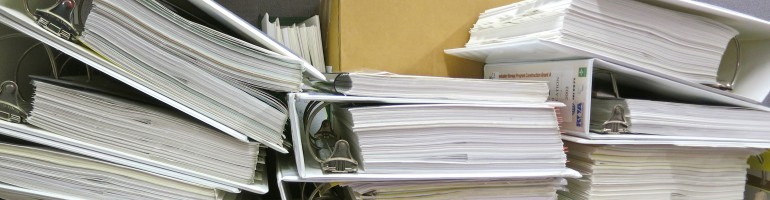
DWR hasn’t demonstrated a lot of respect for laws in the past few years. They got spanked by Judge Roesch when he told them they had to have a take permit to run their pumps. The agencies said “but look, we have documents (in binders!) that are JUST LIKE a take permit.” And Judge Roesch said, how ‘bout you obey the fucking law and come back to me with a real take permit?” And DWR said “but that would take a long time and be hard” and Judge Roesch said “Then you better get started and you can start your pumps again when you bring me a take permit that says Take Permit, not a pretend bunch of documents.” And everyone looking on said, “hmm. DWR thinks laws don’t apply to them.” No wonder they can’t convince Delta residents that they would abide by a governance agreement for a Peripheral Canal.

Which is a shame. I think it is staggeringly irresponsible to have the drinking water supply for two huge cities to be as vulnerable as ours is. The known risks are shockingly high and the Delta will fail whether we build a Peripheral Canal or not. Nothing will save most Delta islands, so we might as well protect against the consequences of Delta failure. The other two options are to depopulate Los Angeles and San Diego or to find other water for them. Of the three options, the Peripheral Canal strikes me as the only possible one. So I’m for it. Battling all these forms of mistrust will make building it that much harder.


Continue reading

4 Comments

Filed under Peripheral Canal, Uncategorized

In other years, black or Asian kids have gotten thirsty.

I took my first hard look at the cover for the draft Water Plan and I laughed and laughed and laughed. The images are standard, kid drinking, sprinklers on ag*, governance, nature, clouds. Whatever. Then! The ONE picture of the Delta is of a levee break (Franks Tract?). Yep. That’s the one thing you need to know about the Delta. Levees break. Guess we need a Peripheral Canal, then.


*Solid set, not hand more. You see how the throw area overlaps? That means all those sprinklers stay there and water the field for the whole season. Solid set. Hand move sprinklers are at much wider intervals. After they irrigate an area, the line gets broken down and moved to the outside of its throw pattern. (The ones in that picture are wheellines, but the thing I’m trying to show is the far apart spacing.) That’s how you tell solid set and hand move sprinklers apart from a distance. The spacing.

Comments Off on In other years, black or Asian kids have gotten thirsty.

Filed under Irrigation!, Peripheral Canal

Sorry for the long absence.

I’m mulling posts, but not finishing them. No doubt I’ll write them all in an un-paced blast. This is why I’m not one of those bloggers pulling down the big dollars. In the queue:

1. I don’t think a water market is the end-all, because I am not convinced I support an economically efficient distribution of water. Surprisingly, some of Yglesias’s commenters got that right.
2. Three years of drought has revealed our brittle our water system is, physically, socially and legally.
3. More on limited response capacity at the water district level, mostly self-inflicted by the decision to keep rates low. I blame motherfucking Howard Jarvis. For just about everything.
4. I owe you government documents! Obscure ones! But I don’t have any in my sights. I am betraying the theme of the blog and the banner. I must do better.

Comments Off on Sorry for the long absence.

Filed under Uncategorized

Why districts are slow to charge market rates for water.

Why don’t districts pass the marginal costs of water on to their constituents?

HAH! Do you see what I did there? Constituents? Not customers, constituents. That’s the first reason districts don’t want to raise rates and pass the marginal costs of supplying water to users.

Districts are public institutions.
Districts are not companies. They have no profit function. They do not, for themselves, want to capture the full willingness to pay for water. That is not what they are for. In fact, their mission is some variant on “cheaply and reliably deliver water”. Because that is why local citizens organized and incorporated a district. Charging any more for water than it costs to get, treat and deliver is failing their mission. It is often also violating their bylaws, charter or the state laws that give them authority.

From the district side of things, they don’t want to make water expensive. Once O&M is covered, they have no incentive. What would they do with the money? Gold plate their pumps? They don’t have shareholders to distribute it to.

This neglects the ‘price signal’ aspect to charging lots for water (show the public it is valuable! no wasting!). There’s a lot to be said for that, so why don’t districts raise rates for that purpose and, um, give any revenues above operations and maintenance to an orphanage?

Board members are publicly elected
The people who set rates for a district are the board members, who are publicly elected by people in the district. They are not strongly motivated to increase rates for abstract considerations like “send a price signal”. First, they’d be increasing rates on their very own water. Second, they are answerable to the people in the district at the very next election. If you go back to those stories on raising rates, did you notice the part about how people are pissed? And organizing? Those are the friends and neighbors of board members, and also the people who will yank them out of office at the next election if rates go up (long digression on the opposition to rate increases in a post below).

But maybe a district really does need to raise rates, to pass along higher costs of getting new water or in this drought year, to encourage conservation. A standard technique is to charge very little for some small amount of health and safety water, and then high prices for frivolous extra water like elaborate water fountains in your tropical rainforest garden, Richy Rich. Economists are all, this is SO OBVIOUS. Do this already. Yeah, well, until last October, it was illegal. This is why economists need to pay closer attention to the law side of things.

Motherfucking Howard Jarvis.
There is an elaborate legal backstory, but basically, one side effect of Proposition 218, put forth by the Howard Jarvis Taxpayers Association, was that it became illegal to charge any household more than the costs of conveyance to that parcel. It was illegal to charge punitive rates to send a price signal to wasteful users. The last year of drought made this such a problem that the legislature corrected it.

So you have all these economists telling districts they could solve their shortages by charging more for excessive use, and districts saying, we’ll get sued. It was illegal until six months ago. I went to a number of different agency meetings, where everyone talked about how conservation pricing was such a great tool, and I kept saying, it is illegal. I think we should stop recommending illegal measures to the public. (Or, if we don’t care about legality, I think we should get far more imaginative.) People didn’t believe me because it evolved over three court cases, but then I’d explain Prop 218 and the court cases, and they’d realize that was a huge problem. Fortunately, Assemblymember Wolk solved it.

So when people say, ‘why haven’t districts instituted conservation pricing already when it is the obvious solution’, one answer is, ‘because there have only been three board meetings since it became legal to do that?’ Then my question is, did you know that? Did you realize that there are legal and institutional barriers that slow districts down? Do you know what they are? It isn’t necessarily ignorance or backwardness on the part of the district. The world that districts operate in is far more complex than the world of economic theory.

3 Comments

Filed under Districts, Drought

Long digression on the opposition to rate increases.

It is fairly common, if you follow a story for a few years to see a cycle of necessary rate increases followed by recall or ousting at the next election. Diehards get elected, swearing on their newborns that they’ll never raise rates like the last assholes. Then, the realities of the district beat them down. Two or three years later, they’re reluctantly admitting the need for rate increases. You would think that people would remember that they used to oppose rate increases and that would give their calls for higher rates some credibility. But I’ve seen vicious cycles where their previous supporters turn on them and yank them out next. The aversion to higher rates starts anew. I always wonder if anyone in the process gains self-awareness or enlightenment.

The story for opposing rate increases is always the same. People storm district meetings, afraid and angry and dogged, saying they can’t afford the increases. I never know what to make of that. In the first place, there are efficiency gains and cutting back. After that, though, what should I make of stories about forcing little old ladies on fixed incomes to eat cat food? Do I believe that increasing water rates are the last straw? Maybe that’s plausible, and I certainly believe that we’re in the beginning of a period when most environmental fees will go up. Gas prices, food prices, firefighting costs, development fees, water, sewage, waste collection. I fully believe those are all about to go up. I suppose any one of them could be perceived as the last straw.

But then, I think two things. I suspect that for lots of people, the reason they can’t pay those fees are that they transformed their income into illiquid extra square feet on their house. That is a huge bind, but I never respected their choice of a big house, so it leaves me a little unsympathetic that their mortgage puts them so close to the edge. Second, the truth is, most of those new fees are different forms of internalizing environmental costs. Someone who can’t afford to pay those cannot afford their standard of living. They’ve grown used to that standard of living under artificially low prices subsidized by the environment, but that is a false expectation.

So, on the one hand, I really do feel bad for any particular nice old lady eating cat food. When those stories get personalized, they really hurt. On the other hand, their fight is to impose the costs of their lifestyle, of which water is just one example, on anything else. The environment, most likely, or the collective as a second choice. Then I am not so sure that that lifestyle is such a valuable one that I care if they get to continue it. I am even less sure that I care enough to spend money supporting their lifestyles.

(Please note that I would make the decision to support some forms of farming, because it can have positive externalities that I want. So it isn’t like I’m absolutist on this stuff.)

Comments Off on Long digression on the opposition to rate increases.

Filed under Basic stuff, Districts, Water Markets!!!

Why it isn’t simple to charge market rates for water. Background.

I see this stuff all the time (sometimes, I see double!): an oversimplistic assessment that raising rates for water would end shortages. I am, actually, in favor of charging by unit of water (so you pay more when you buy more, a concept so straightforward that it is embarrassing to have to say it explicitly, but not always the norm for water pricing). I am also in favor of charging a rough marginal rate for water. These days the cheap chunks of water are thoroughly exploited and the next source costs more to collect, treat and deliver. I’m fine with water users seeing that cost for what it is. So it isn’t that I’m opposed to the concept of raising rates on water. But I do get frustrated when people act as if that is straightforward and obvious and the full solution. Districts aren’t dumb. There are reasons they have the pricing structures they do.

Some things to get out of the way:
1. No utility sells water. Water is free. What they sell is capacity and distribution. You are renting a length of pipe as water moves through it. The way to tell how much you bought is by measuring the amount of water, and that’s how they charge you. For your billing and behavior, this is just like charging you for water, so this is a minor technicality that makes no difference. It just bugs me to hear people saying to charge more for water, because I am hopelessly pedantic and literal minded.

2. It isn’t coincidence that the people you hear saying that pricing water is the bulk of the solution are all economists. A lot of the reasons pricing structures change slowly are over on the legal and institutional side; economists dismiss those as trivial, malleable impediments, but lawyers understand that they give districts a different set of incentives.

3. Rates ARE going up. Fast and hard this year.

4. The word “shortage” is doing some work that gets skipped over a lot. When everyone says “drought” and “shortage”, what we basically mean is “less then we’re used to”. We don’t mean, and won’t in the foreseeable future, “not enough to drink and bathe”. So far we’re not even close to that range. What we do mean is “not enough to use it like we’ve always been able to”, on lawns and embedded in our meat supply and on wasteful appliances and by deferring maintenance on leaky pipes.

Now here’s the thing. When laypeople hear No More Shortages, they think, ‘there’s plenty, I can continue hosing down my driveway just like I always have.’ When economists say No More Shortages, they mean charging so much for water that people cut out the uses they don’t want to pay for. Then supply curve intersects demand curve, and the economic definition of No Shortage is met! Yay! In real life, high price signals that cut out less-intensely-wanted uses means no lawns, fewer burgers, switching out appliances and replacing leaky pipes. That is what laypeople thought was a shortage! It is not the careless plenty they grew up with.

I am personally fine with this. I don’t have any emotional attachment to careless water management or lawns. I do want to point out, however, that when economists say No More Shortage, they are talking about what the broad public considers a shortage (less than I’m used to and I have to pay attention).

5. One of the standard critiques of markets is that since wealth is distributed unevenly, the marginal value of a dollar is different between rich and poor people. The rich will be able to afford their swampy lawns while the poor scrimp to drink. You can create pricing structures to alleviate this (a very low rate for the initial chunk of water, or refunds to low-income users), if environmental and social justice are important to you. Those are worth explicit consideration and decision.

All that out of the way, lets get to the good part. Why don’t districts pass the marginal costs of water on to their constituents?

Comments Off on Why it isn’t simple to charge market rates for water. Background.

Filed under Districts, Drought, Water Markets!!!

Bad news.

Energy Secretary Steven Chu gave an interview to the LA Times a couple weeks back, saying that we’re going to lose 90% of the snowpack, California ag is doomed, and he isn’t even sure we can hold on to our cities. It was a strong statement and I generally approve of strong statements. It is a worse fate than I expect. I’ve said below that my prediction is losing a third of CA ag, and how we should do that.

Anyway, the New York Times today discussed Chu’s statements, got a bunch of opinions about whether it was too strong or irresponsible. Did experts think Secretary Chu was on target? The answers vary, but none of them said something that I think is really important.

Secretary Chu picked the most extreme prediction from the suite of models. You can argue over whether the models are accurate; you can debate whether you should pick the upper bound or lower bound; you could squabble over how the effects will play out in real life. But the thing that none of those experts said in that interview is that right now, we are exceeding the carbon emissions in the most extreme model. Further, effects are arriving faster than we expected. Based on what we are doing now, the worst case scenario is the floor.

It is plausible that the next decade will see a sharp reduction in emissions, if Pres. Obama prioritizes it. If China joins us (or leads us, for all I know), in ten years we could be back in the mid range of the climate models. But until that happens, when you see a climate prediction and it gives you a range, assume that we are outpacing the worst prediction.

LATER: Apparently MIT has revised their models to include current emissions levels.

Comments Off on Bad news.

Filed under Basic stuff

Fix California’s water system!!!

My main take-away from this meeting on a California Constitutional Convention? I didn’t expect to hear so much about water. The first speaker, from the Bay Area Council, listed water as the second most important crisis the state has to solve, after resolving budget procedures. The next speaker, Walters from the SacBee, mentioned it alternately first or second every time, water and the budget. It came up a couple more times, always as an important function of government that California was failing at.

Huh. I pay a lot of attention to water, but I don’t personally consider it a scarier problem than climate change, converting our energy sources and distribution to renewables, densifying cities, matching up our population to a quality of life. I’m pretty scared of the way we imprison people, actually. That strikes me as a real nasty feedback loop. I mean, yeah. Our water system poses some hard problems, but I wouldn’t have picked it as one of the two top problems in the state1. I wonder how much that public perception has to do with being in the third year of a drought.

Anyway, all that talk of the government failing at water made me wonder what the state could actually do for water systems, in a beautiful world of very good governance. These people who want the state to fix the water problems, what can they expect?

I know what they want. They want to keep using water they way they do now, not pay much more for it, and have so much faith that it will always be there when they open the taps that they never think about it again. That’s the standard they’re used to. Heh. A perfectly functioning state government couldn’t provide that. We will have less water overall, spread over more people, and the best Constitution in the world will not make it rain.2 Water will be scarcer and more expensive.

What, then, could the laws of our state actually enable? Three things: reliability, certainty and allocation. This is not the same as more water. Our old strategy was to have so much that even with sloppy management sloshing water all over, reliability, certainty and allocation were largely met. (Unless you were a salmon or smelt.) Now, though, we’re going to have to focus on what people really want.

The way to support reliability is through the budget process. Paying for O&M on our existing plumbing, putting in cross-ties and canals so that regions are served by multiple systems, instead of one that can fail and leave them stranded, reconstructing and getting rid of existing bottlenecks. Our current projects could be optimized and better controlled. Better reliability could be bought by a state government that could budget for it.

Certainty and allocation come from distribution rules, and this is where overhauling the state codes or Constitution can actually have some effect. I have opinions about what that should look like, but it is more important that people realize that this is the field of play. “Fixing water in California” does not mean “perpetuating what we’re used to”. It means making rules for who gets how much of what little water arrives and why. It means deciding who gets the shaft when flood or drought arrives, and whether there will be compensation. It means that Silicon Valley execs can know that they’ll get all of what they need nearly all the time for a lot of money. It means that growers who commit to accepting flood waters know they’ll get paid back from a community fund, so they can exist as farms the year after. It means that cities can plan for expected populations and know they’ll have a smaller but reliable amount of water for all the households they serve.

That’s what new rules could do. That’s the best a new Constitution could do. It won’t “fix the water system” in the sense of making more water exist so we can live like we have. “Fixing the water system” means meeting the underlying needs (reliability, certainty, allocation) so that people can adapt and choose.


Continue reading

5 Comments

Filed under Drought

Some future post, no doubt.

I should also say that I would like for California’s cities to start growing a noticeable chunk of their own produce.  That should be part of a good future for California agriculture.

Comments Off on Some future post, no doubt.

Filed under Uncategorized

Policies for a pleasant future for California ag.

This piece on the future of CA is kicking my ass. I’ve been trying to make it good, but perhaps I’ll give up on that and just try to make it direct and short not short.

Basically, I see two things we should actively pursue. The labor-intensive farming of the future should be as equitable and pleasant for growers and workers as it can be. The contrast here is vassal feudalism or sharecropping; the San Joaquin Valley has seen this structure within living memory, so that isn’t an impossible alarmist threat. The other is that I think we’re going to need vigorous investment in high and low-tech biology and agronomy. That’s the science with the most promise for a unicorn-style rescue.

Given that farming will involve a lot more labor as fossil fuels and chemical pesticides become prohibitively expensive, here are the economic policies that I think can influence where we land on the spectrum ranging from feudalism to the Jeffersonian ideal of small farms populated by hippies.

Removing barriers to entry for people who want to farm.

The first of these is straight-up pathetic. Farmers need affordable health care; since they are self-employed in a hazardous business, it is expensive for them and their workers. Solving health care for Americans in general would also make non-industrial farming more viable.

Provide a retirement package to farmers. Farmers deal with large fluxes of money, and have an erratic yearly income. Further, some farmers tend to turn their money into very illiquid forms, like additional land or large machinery. A predictable retirement might ease some of the pressure to mine their soil or groundwater for short-term returns. More importantly, it would ease some of the necessity to sell land to urban development at the end of a farming career. The common quote is “my land IS my retirement”. That may be a realistic evaluation for a grower now, but not a good way to keep a stable community of small and mid-size farms around cities. We already have conservation easements, legislation and ag land trusts to address this now. I don’t know how effective they are or which measures work. Perhaps those do a better job keeping land in agriculture. But if cashing out for retirement is a reason reluctant farmers sell land for development, then I’d be happy to pay their retirement instead.

Give them money.

Food will have to be more expensive. I don’t see a way around it. Supporting more people making decent lives farming means internalizing the costs that farm workers bear for us now. Farm workers now pay for mismanagement and rent extraction with their lives, bodies and health. Paying for good management and additional hard but not crippling labor at the cash register will cost food purchasers more. I don’t know what state level economic policy enforces this. As long as race-to-the-bottom agriculture from other countries or states is readily available to compete on price, farms will go out of business before they internalize their environmental and humanitarian costs. That points directly to protectionism. (I don’t personally object to that, and the prospect of economic inefficiency!!! doesn’t offend me either.) I suppose the collapse of international trade from peak oil, or a sudden mass conversion to purchasing sustainably grown produce could also have the same effect. But those are hard tools to manipulate.

I’d also like the collective to confront and make a decision about imposing climate risks on farmers. Agriculture acts as a buffer for climate events. We assume it will be a source of water in drought, and it will inevitably be the place we put floods. This is actually a very nice function, and one the state should value and develop. Further, when we ask farmers to convert from low-input reliable field crops to higher management, locked in capital, and agronomically riskier row crops, we are asking them to live closer to possible failure. Since extreme weather perturbations will happen and hit agriculture harder than the rest, we should plan for a type of farming that can recover from them. The work on resilience favors interconnected, very diverse, distributed and redundant systems. Like, lots of farms growing lots of things. We should also think about bridging farmers through years they can’t farm, perhaps with money.

In conclusion.

Besides those things, there is the pablum of the Ag Vision action items, most of which are fine measures. But fundamentally, for California agriculture, I’d like to see lots of people farming the good soils on mid-sized farms they mostly own, paying laborers decent wages. I like this vision for lots of reasons. It sounds nice for the people involved and I want a good quality of life for our citizens. I believe it is the sturdiest of the options, with the most promise for renewing its population, recovering from shocks, responding to different types of scarcity, and protecting agrarian and environmental resources. The concept of food security is dismissed by economists, but I worry about it enough to prioritize it. We have very good farmland here, which should be gently farmed for a long time.

This will cost the public money, both to implement policies and to buy Californian food. I think farming is important enough to subsidize, although I don’t want to subsidize farming by indirect means, like water projects or crop payments. Frankly, if we want farmers to produce food and be agrarian and environmental stewards, we should pay them to do precisely that. I’m struck by the fact that a hundred years later, I am circling back to the original purposes of the 1902 Reclamation Act. It created the Bureau of Reclamation to build water projects to populate the West with homesteaded agriculture. The goal is a good one: resilient agricultural communities, weathering a lot of change, producing a lot of good food, using our extraordinary natural resources without damaging them, giving agricultural Californians a nice life. It can be done, with decisions and wealth.

1 Comment

Filed under Agriculture