Two kinds of changing wealth.

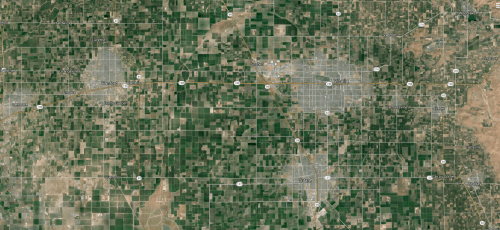
I don’t see the new emphasis on stormwater as a changing paradigm.  I see it as a society that has become poorer looking to the next-lowest-entropy source of water.  This is the behavior of people who have lost wealth (high elevation snowpack) and on top of that, have to spend wealth to make the new higher-entropy source act like the old low-entropy source (by gathering and cleaning distributed dirtied water).  Climate change will cost and cost and cost.

***

You know, if the AroundDeltaWaterGo doesn’t end up happening, the State Water Contractors will have ended up transferring a few hundred million dollars to slightly lefty urban environmental consultants for no tangible benefit.  They will have underwritten some environmental research in the Delta in the process.  Thank you, Westlands!

11 Comments

Filed under Uncategorized

Applying my three questions to existing water markets.

Returning to Mr. Lustgarten’s close look at water markets in practice, I am pleased that my three questions for prospective water markets would have predicted the success and failure of the examples.  A reminder of the three questions:

  1. What social goal is the water market trying to achieve?  That goal cannot be “have a real good market”.  Water markets are tools, among other tools like regulation or planning, that can be used to achieve something.  What is that thing for this specific proposed market?
  2. What is the built-in mechanism that ensures that the market is redistributing a fixed amount of water with economic efficiency, rather than efficiently drawing an open-ended amount of water out of the environment, the ground, and rural communities?
  3. What is the built-in mechanism for the Kaldor-Hicks compensation?  The Kaldor-Hicks criteria says (roughly) that the water reallocation would create so much more value that the winners could compensate the losers (beyond or outside the sale itself).  But that never actually happens, so I would want to see a mechanism for that built right into the market.

The answers for Crowley County, the example of a water market destroying small towns:

  1. No explicit goal.  The implicit goal was to put a structure in place that allowed cities to buy water.
  2. No built-in mechanism for limiting the water sales to a fixed quantity of water.  Cities were able to purchase all of the farming water in the county.
  3. No mechanism for Kaldor-Hicks transfers, so third parties got no compensation.  The money directly from the water sales themselves seem to have mixed effect.  The farmer and son-in-law quoted sound as if the money didn’t keep them as satisfied as farming and having a healthy town would have.  But perhaps Mrs. Tomky and the children who used the money to move away were quite pleased by the sales.  I don’t know how the utils balance out.

The answers for Palo Verde, the example of a transfer that looks like a success:

  1. The goal was to get some reliable water for MWD.
  2. The transfer water is limited to water from fallowed acreage, which is capped at 35% of each farmer’s holdings.
  3. MWD “has also invested $6 million in the community, to counter whatever economic harm might come from the fields’ temporarily drying up.”

My readers with water rights!  Here’s what you do.  If Mr. Deane approaches you to buy your water rights, do not let him make his pitch.  Keep him at bay with a pointy stick and ask him those questions until you get answers you like.  Do not sell your water rights unless you understand and you like the answers.

7 Comments

Filed under Uncategorized

A close look at water markets in practice.

The Atlantic is running Lustgarten’s detailed piece on a hedge fund manager brokering water sales.  I appreciated getting a specific example of the phenomenon that I described here.  I wrote that individual farmers acting independently in a market are the wrong scale to be making water use decisions.  Water infrastructure needs a support base.  Individual farmers selling water away will crash their whole district.

Orville Tomky … tried to resist as the pressure mounted. “My wife every night at supper would say, ‘When are we going to sell the rest of that Twin Lakes water so we can have a lot more money?’ ” he told me. One night he divided up the water rights, giving 20 shares to each of his four children, five shares to each of his five grandchildren, and 30 shares to his wife. Selling the shares put some of the kids through graduate school, gave them down payments for their own homes, and paid for a family ski lodge in the mountains.

Eventually, though, Crowley County passed a point of no return. With so much water gone, the empty irrigation ditches didn’t work; one lonely farmer at the end of the run would see all his water soaked up by the soil long before it ever reached his farm. And with fewer and fewer farmers around to share the expense of maintaining the ditch systems, the cost kept rising. Farmers had little choice but to sell, and all but 11 in the county did. The place literally dried up.

Market advocates say that the market is less coercive than a guvmint Stalin, but in practice, farmers felt plenty coerced.

An intentional program of reallocating water could be based on social criteria.  It could protect small towns, choosing instead to close the farms of the 1%.  It could choose to protect acreage that grows truck crops for Californian consumption instead of luxury food exports.  It could decide based on the engineering elegance of the irrigation district infrastructure.  It could choose based on the potential for retired land to become wildlife habitat.  A state that foresees decreased water supplies from climate change and publicly decides what it values could prevent shit like this:

Kneeling in his driveway changing a truck tire last summer, Tomky’s son-in-law Matt Heimerich recalled what the town had lost. Though tens of millions of dollars in water rights were sold, few of the proceeds were reinvested in the community, he said. One by one, families moved away. The tomato and sugar factories shut down, and without goods to ship, the railroad stopped sending trains through town. Ordway’s car dealerships closed, and the tractor store went bankrupt. As though someone had pulled a bottom block out from a Jenga tower, Crowley County fell into an inexorable collapse.

“I couldn’t have eaten enough Prozac,” Heimerich said.

One could view Crowley’s loss as an inevitable part of the larger downturn in American farming—and a justifiable reallocation of resources. Crowley County was itself diverting water from the Colorado River system, after all, under a legal system that encouraged waste. But the people still living in Crowley point to the green fields in adjacent counties, and say the water sales killed their towns. Of the 60,000 acres once farmed there, about 4,000 produce crops today. Ordway’s Main Street is a procession of boarded-up buildings.

It may be that Crowley’s loss is the least-harmful choice.  But making a choice and planning for transition for the town would be kinder than letting individuals twist in the market.

Continue reading

7 Comments

Filed under Uncategorized

Mr. Amaral: not woke.

A couple weeks ago, Rev. Ford and Ms. Jagannath wrote an op-ed for the Fresno Bee, contrasting Westlands Water District’s demands for irrigation water with those of the farmworkers within the district, who often don’t have access to clean potable water.  Last week, the Deputy General Manager of Westlands Water District responded with his own op-ed in the Bee.  I will let my readers judge the respective merits of the pieces for themselves.  Instead, I want to talk about the tone of Mr. Amaral’s piece.

Mr. Amaral’s op-ed clanged for me the same way the old, male panels at CA Water 2.0 did.  I hypothesize that both efforts were reflexive attempts to persuade the people who have always been in power, and that the important audience has changed enough that the mismatch calls attention to itself.  Mr. Amaral’s tone in that op-ed is personal and condescending, asserting a great deal amount of power for itself.  He claims the power to declare who is an activist, what other people’s real concerns are, what they ignore and what they understand.  Given the relative societal power of the authors, it is a pretty nasty example of punching down.

Now, an op-ed is an attempt at persuasion.  So who is Mr. Amaral trying to persuade with a condescending tone towards two women, one visibly of color?  Perhaps he never considered the question.  Perhaps his unconsidered default reader is a man with power.  But that’s not how it is anymore.  I watched carefully as you subscribed to my blog, and I can tell you.  Half of y’all are women.  The internet (or maybe the new era) has taught us to consciously notice the dynamic rather than subconsciously accept it.  What we see is that Mr. Amaral does not care if he pisses off at least two substantial groups in the water conversation.  He never thought of them, or he doesn’t believe they have enough power to matter.  That’s the old way.  As times change, it stands out more and looks uglier.

***

A kinda funny side note is that there is another group of farming advocates who is tirelessly working to be personally appealing ambassadors.  They are friendly and widely available and a visit to their farms show that they’re doing really neat agricultural work.  The heart of their argument is “but you’d be taking water away from nice people.”  Which is true but irrelevant and only part of the story.  (This piece is a good example of someone falling for that hard.)  Anyway, ag ambassador people.  Mr. Amaral’s undoing your good work.  You might want a word with him.

6 Comments

Filed under Uncategorized

Going to be an interesting year.

Mr. Curlee’s commentary notes that he and California farmers are detecting new trends in California.

Although most farmers prefer farming to politics, they know that the political process affects them directly so they try to keep an eye on it. What they are detecting currently is a noticeable drift, particularly in California.

As government-imposed rules proliferate, farmers also wonder if some of them might be imposed by those in the power structure who don’t like the free enterprise system and prefer to replace it with something more liberal (socialistic). But they have learned that expressing that doubt only results in ridicule, often by their own millennial offspring. {my emphasis}

That surprised me, because I am also getting an inkling of a changing of the guard.  Mr. Curlee indirectly reports that the children of farmers don’t share their concerns about government policies overriding the free market.  I’m also sensing a generational change.  I’ve been having a hard time articulating it, which is why I’ve not been writing here.

My sense is that the PeripheralCanalFix2.0 has been occupying CA water policy for ages,  by soaking up money, attention and political strategizing.  We’re at the beginning of a very big year for TwinEcoRestorePipes, and seeing a full court press from the big boys.  It feels very much like a final push of the old water establishment. It may work, I don’t know.  But whether it does or not, settling the question of the AroundDeltaWaterGo is probably their last big effort.  Getting new federal and state administrations up to speed (pro or con) would be too much work, especially if the next governor doesn’t come in with Jerry Brown’s priorities.  With the question of the ZoomSiphonRiverMover settled, more water policy arenas would be less fraught, because participants wouldn’t be simultaneously evaluating whether an outcome is good or bad for the GravityBlastTunnelGulpers.

So Mr. Curlee and I, as ever, are of one mind.  It feels like change is coming.


4 Comments

Filed under Uncategorized

Reax: CAWater2.0, Gov. Brown’s statement, National Review Online

CAWater2.0

I watched most of ACWA/DWR’s CAWater2.0 conference yesterday.  They were presenting the updated Governor’s Water Action Plan and pimping new Delta conveyance.  I found the event… old.  It just looked old.  The speakers were invariably my seniors.  They were relentlessly white, nearly all men.  Even the name, CAWater2.0, feels old.  Windows2.0 came out in 1987.  It is no longer a hip reference to tag a numbered reference to a name, but the Olds might think it is.

It made me think.  The Peripheral Canal was voted down in 1982.  My sense is that the possibility of the Peripheral Canal has largely paralyzed California water policy since then (with the possible exception of IRWM).  If the Peripheral Canal had been entirely off the table, the regions would have adapted by now, gone ahead with storm and wastewater reuse or turf removal or whatever needed to happen.  If it had been built, whatever would have become of the Delta would already have happened.  Being in limbo has meant that we never got serious about living without it or adjusted to having it.  The gentlemen at that conference have spent their professional lives on trying to make it happen, at the opportunity cost of whatever else they could have achieved.

Governor Brown’s Statement

I wish I knew whether Governor Brown’s opening statement was prepared or extemporaneous.  Two things stood out to me.  First was this paragraph:

We have two very different perspectives. One is, there is no nature, don’t worry about other species, we’re king, just full speed ahead and just exploit to the max. The other side, I’m characterizing but only somewhat, is let all go, we’ve screwed it all up, let’s let it go back to nature, we don’t need any of these projects. Of course if you did that, tens of millions of people couldn’t continue to be here in California.

There is middle ground.  Much of the land farmed by the State Water Contractors is resource extraction by the 1%.  It doesn’t support farm towns; it delivers additional rents to urban billionaires; these days it is largely in tree nuts exports.  It is what you drive by on the 5.  We have about nine million irrigated acres in the state these days.  If we farmed closer to five or six million acres, we’d still farm the Sac Valley, the Friant, northeastern San Joaquin Valley, the coastal valleys and Imperial.  That’s a lot of farmed acreage.  Retiring 3 million irrigated acres would release about 9 MAF back to the environment.  That’d be a noticeable chunk to return to rivers.

The other thing I noticed was this:

I would say most people in Santa Clara don’t know that more than 40% of their water comes from the Delta, and if that thing goes because of climate change or earthquake, with massive sea water intrusion … {my emphasis}

Governor Brown’s frustration with the Delta advocates is on the surface these days, so this doesn’t reveal any secrets.  But Governor Brown referring to the Delta as “that thing” signals to me that his association with the Delta is more like ‘nearly broken machinery’ than ‘a special and unique place’.  That’s fine; consistent with his policies.  But I raised my eyebrows when I got to that phrase.

National Review Online

The National Review online is real conservative, so I knew what to expect going in.  The premise of the piece, that allocating water to fish is a bad tradeoff for farmed acreage was as expected.  I found the piece very readable and enjoyed a tone that celebrated the industrialized side of farming.  I read a lot of hippie stuff, so it was an interesting change to hear machinery, technology and control praised. I particularly noticed these paragraphs:

Uncertainty is the new normal,” CEO John Harris sighs from the driver’s seat, his smile disappearing. “This is no way to run anything.”

Harris tools the car around untouched pastures, and I am told at length about the Water Troubles. “Without water, we can’t work,” Bourdeau laments from the backseat. “It’s not healthy. We’ll do what we can. We’ll grow what we can grow where we can grow it. But without knowing how much water we’re going to get, it’s so difficult to plan!” A pistachio tree, for example, takes five to seven years to grow. “How can we plant one now if we can’t guarantee we can water it in a couple of years?” Bourdeau asks.

That the drought is making planning all but impossible is a refrain I hear all across the region — both from the established farmers who are desperate to draw this year’s crop map and from the wannabe planters who cannot secure the loans they need to start up on their own. One aspiring rancher tells me that he is thinking of selling his land and moving out. “I wouldn’t lend me the money I need to plant,” he gripes, honestly. “I’m stuck, I guess. I can’t plant. But who will buy my land?”

One way to provide that certainty would be to zone the SJV into regions that get water all the time (the eastside, permanent crops and row crops), sometimes (along the east-west rivers, row crops), and only-in-very-wet years.  Farmers would have far more certainty then, as would lenders.

Although the aspiring rancher probably doesn’t appreciate my concern, I did warn my farming readers to sell in the last drought.  He’d have done very well had he been a reader and followed my advice.
14 Comments

Filed under Uncategorized

Welcome.

Hello, new readers.  Thank you for your attention and visits.  I am always grateful to have readers; I hope you also comment.  (Hello, readers who’ve been with me all along.  Dude, we got blog-famous.)

This is not an easy blog to read.  Over time, I have found that I have only one writing voice.  My attempts at anything more basic or gentler just languish in the Drafts section.  For the same reason, I don’t explain background.  If this is not your field, you can find background at Maven’s Notebook, the California Water Blog, or the Water Education Foundation.   Also, I trust you to get jokes without highlighting or explaining them. You can always write me to ask about anything that sounds off or that I left unclear.  One of my primary goals for my writing is to be clear enough that the reader knows precisely why and where she disagrees (if she does).  If I’ve missed that goal, I want to know.

There are a whole lot of archives in the archives. This piece captures a lot of my philosophy.  Recently I’ve been thinking a lot about drought, about paying for damages caused by subsidence, about the new groundwater agencies and griping about water markets.  OK, I’ve been griping about water markets for years.  Every now and then someone will write something very rich, and I’ll be able to do a whole series.

Of all of my posts, I probably like this one best.  I was so angry.  It was near the end of the last drought and the commander at Lemoore Naval Air Station got on the news in uniform, talking about how the ESA protections for smelt needed to be voided immediately, so his base could get water for homeland security reasons.  It is an obscure post that digs into online resources and calls out a weak argument; it lays on the righteousness real thick.  That sums up the blog well, I’d say.

7 Comments

Filed under Uncategorized

Faux Latino grassroots groups; paying subsidence damages.

I very much enjoyed this New York Times story on how Westlands Water District is funding faux Latino grassroots groups to advocate for breaking environmental laws to deliver more water to their huge farms.  I had two main thoughts about the story:

  1.  No mention of Schwarzenegger and the Latino Water Coalition?  They were the first to try this strategy in the last drought, also paid for by west side agricultural groups.
  2. I am more and more convinced that the truly sharp political players in this game are not Westlands with their traceable lobbying funds and visible attempts at political power.  More and more I respect the districts immediately south of them, some of whom I had never heard of until I actively started searching for them.  Now those people know how to keep their heads down and grow tree nuts.  Everytime one of the owners of Dudley Ridge WD sees Westlands in the news, he must think, “Pikers.”

***

I am pleased to see the issue of paying for infrastructure damage caused by subsidence come up in new venues.  I was appalled by one of the suggestions for how it will get paid for:

Should these costs be assessed by difficult lawsuits under tort law, left to an arrangement under the basin plans required under the new Sustainable Groundwater Management Act, suffered by canal owners or flood victims (Ronald Coase lives!), or paid for by the public under some future water bond?  And who should be responsible for pursuing these remedies?  These seem to be the most relevant points of state policy to resolve while we avoid panic that the Earth is falling.

[emphasis added]

By bond measure?  That’s horrible.  The only thing that could be less fair to 99% of Californians than paying for these damages out of the general fund is making future Californians pay for these damages (plus interest) out of the general fund.  Future Californians deserve to pay for the externalities of today’s growers even less than almost all current Californians deserve to pay for them.

URGENT UPDATE (1/9):  A source points out that a former front site for a fake grassroots organization, waterforall.com now has lovely pictures of horsies  (warning, music autoplay).  Those are some nice looking horses, so the world is a better place.

15 Comments

Filed under Uncategorized

Good recommendations by PPIC/UCD group.

I find it dismayingly easy to write critiques of people that I substantially agree with, but have some minor point of disagreement.  Often that’s easier than taking on a fundamentally different viewpoint.  But I’m finding even less to say when I don’t even have a minor point of disagreement.

The UCD/PPIC group made fantastic recommendations to the State Board on Measuring and Reporting Water Diversions.  We would be substantially better off if those were thoroughly implemented.  Too often recently, the state agencies have been pleading for money to support the gauging stations they already have.  Some of those gauges have been providing decades of data; I have heard that after funding cuts, some personnel have continued checking gauges on their own time, so there aren’t holes in the record.  More instruments, more telemetry would be a very welcome change.

I also liked and agreed with the proposals in PPIC’s recent Allocating California’s Water: Directions for Reform.  I especially liked setting instream flows as the most senior water diverters, if we are going to keep our incredibly stupid and unjust seniority-based system.   I didn’t think Allocating California’s Water went far enough, but the things they propose don’t foreclose any future options either and they tidy up some problems nicely.  So I am in favor!

***
I thought the language in this EDF op-ed was interesting.  He discusses removing barriers to “water sharing”, of which a market might be one example.  I’d be pleased if we moved away from the inevitable “water market” or “water transfers” (which are also purchases) as the only means of moving water to different users.  Maybe this marks a change in environmentalist support for water markets as the win-win, nobody-hates-you-for-saying-it proposal.

***

Hope you are having a good winter.  I probably won’t write much until 2016.  Happy New Year!

2 Comments

Filed under Uncategorized

Retire uninhabited farm acreage to minimize human misery.

As groundwater sustainability agencies have to bring irrigated acreage in line with the sustainable yield of the groundwater basin, they will be retiring irrigated lands (Dr. Burt: 1-1.5 million acres; Dr. Lund: up to 2 million acres). I say 3 million acres, because so far everything we’ve predicted for climate change has been an underestimate.)

I have two top priorities for the Central Valley’s farmland.

  • Preserving about 5 million acres of the best ag land for growing food for humans, mostly Californians.  I don’t worry too much about this goal, because we have about 9 million acres of ag land now, so we could lose quite a bit before I get concerned.
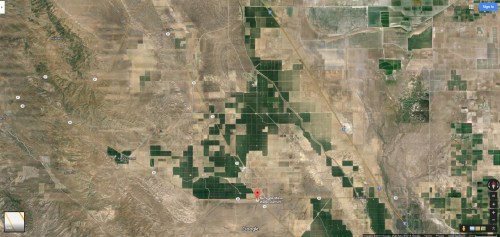
  • Minimizing the human misery from the transitions brought by climate change.  Assuming that retiring farmland sucks for the farmers whose land is retired, and sucks for their communities as people leave farms, that means choosing to retire lands that support the fewest people and communities.  It turns out there are entire water districts where not one single person lives.  Not one person would lose their way of life if these districts closed.

Berenda Mesa Water District:

27,000 irrigated acres, approx. 80,000AF/year

Boundary map here.  Centered satellite map here. (Click to expand and verify.  Not one house, no towns.)

BerendaMesa

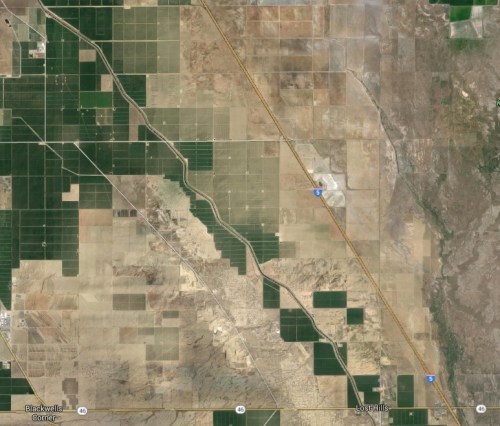
Lost Hills Water District:

32,000 irrigated acres, approx. 90,000AF/year

Boundary map here.  Centered satellite map here (no houses, no towns).

LostHills

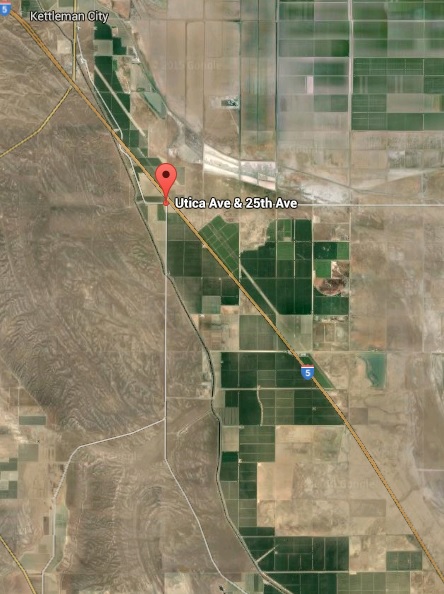
Dudley Ridge Water District (no website):

17,000 irrigated acres, approx. 34,000AF/year

Boundary map here, page 50. Centered satellite map here.

DudleyRidge

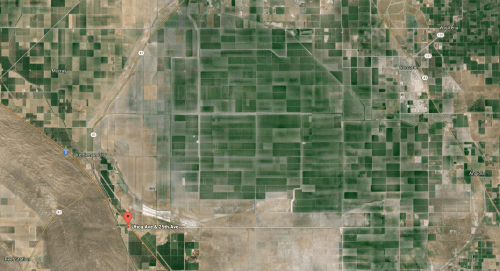
What is that green, up in the corner?  I think it is Westlake Farms. Sixty-thousand acres, give or take, depending on whether their neighbors have been paying attention.  That means about 180,000 AF/y.

Westlake Farms

The owners of Westlake Farms do live on the farm, so if that acreage were retired, they would feel misery and so might their 11-50 employees.   But that’s still not a whole lot of people.

There is a lot of acreage like this.  Compared to the southwest corner of the valley, even the notorious Westlands Water District is relatively populated.  For contrast, look to the east in the Friant.  Those are towns and many, many farms.  Were those acres retired, many people would feel miserable.  My second criteria for retiring ag lands (minimize human misery) leads to preferentially retiring lands in the western valley.  Responsive local groundwater sustainability agencies should think carefully about their criteria for land retirement.  Geology and hydrology are only two factors.  The way their constituents want to live going into the next few decades should matter far more.

southern Friant

Continue reading

7 Comments

Filed under Uncategorized