Approaching steady-state economies.

I don’t usually interpolate comments and original text, because I think that’s hard to read, but I thought something different about nearly every line in the “Historical Context” of ACWA’s Sustainability Principles, so I’m going to do it this time.

Historical Context

California’s physical water delivery system is a tribute to the far-sightedness and big thinking of previous generations. Developed largely in the middle of the 20th century, the system has the capability of delivering water throughout the state.

I don’t automatically think that our water projects are great and I mourn the natural systems they destroyed. I like knowing how canals work and I like looking at a grand engineering feat. But I haven’t yet decided that the water projects and the way they shaped the state are good on balance, so I haven’t resolved that they’re a tribute to anyone.

But, I gained a whole lot of appreciation for the water projects a year ago when Atlanta was in their serious drought. From the very little I know, they had one reservoir draining one watershed and one water main to the town. Their reservoir was a few weeks from empty and I could not figure out what they were going to do. They couldn’t build a canal to a river in time to supply their population. You can’t truck in water for millions of people. Their one source was dry and as I worried at the problem from thousands of miles away, I was stumped. They turned to prayer as the solution, which was as good as anything I had to offer. With their limited system, when that reservoir emptied, they would have to evacuate a whole city. Imagine, an intact city evacuated within a week for want of water. I know the end times are upon us and stuff, but it would still be an amazing thing to see such visual evidence of the new era.

That made me really appreciate the extent of our huge intertied system. If it gets to the point where a major city in California has no water, we do have options. Most places have a couple big canals from one large project or another. In an emergency, we could drain some far away reservoir dry and get water to a city within four or five days. You’d have to break environmental laws and it would be expensive, but it could be done. After looking at Atlanta, I was newly grateful for that capacity.


Every Californian benefits from the efforts of water visionaries who provided imported water supplies for our cities, Los Angeles, San Francisco, the East Bay, and elsewhere. By the 1920s, large scale regional management of water secured the economic health of Southern California.

Some people call that the demise of the Owens Valley. These events have names and histories, you know. We don’t have to talk about them in every last document, but vague language about securing the economic health of SoCal underemphasizes a nasty history of bullying, conniving, theft and graft. I drank that water my entire childhood, so I’m not the one to say the LA Aquaduct shouldn’t have happened. But the water visionaries weren’t only heroes.


In the 1940s and 1950s, construction of the Central Valley Project, originally envisioned by Californians in the 1930s but financed during the Great Depression by the federal government, linked water management in the Central Valley from Redding to Bakersfield.

HEY! We’re in a depression right now! Is it coincidence to mention federal financing of water projects during depressions? Just, you know, happening to mention that the fed used to pay for big projects. You know, during depressions. Which we’re in. And, like, there’s this huge canal around the Delta that someone needs to pay for. The feds used to pay for stuff like that at times like these. I’m just sayin’.


The State Water Project, which delivers water to more than two-thirds of Californians, was the masterstroke of Governor Pat Brown and a team of incomparable civil engineers guided by policies laid down in a California Water Plan completed in 1957.

Jerry Brown, Pat Brown’s son, gave a lecture at a class I took in the early nineties. That wasn’t a busy period for him, I guess. I’ve had a one-track mind forever, so I asked him about the water projects and if he would do them again. He got a little quiet and said something very like “I don’t know which to regret more, the water projects or the state highway system.” Huh.


The system developed by these collective efforts served California well during the last half of the 20th century and must continue to do so in the future. However, the system today is in crisis. The economic consequences of failing to respond successfully to this crisis are potentially catastrophic. Many of the challenges we face today as water managers arise from changing natural resource policies and the difficulty of responding to these changing policies with a physical system that was designed and constructed under a very different set of rules.

OK, first I want to give the authors full props for writing “economic” before consequences and in lots of places above. Good for them for making their focus explicit. Given their mission, to develop and provide water to sustain humans, it makes a lot of sense to use human eonomies as a measure of success. It also protects them from quibbles with phrases like “served California well during the last half of the 20th Century”, because you could argue that it devastated fisheries and destroyed grasslands and rivers throughout the state. Which isn’t necessarily serving California well. But if we’re talking about how well they supported human economies, then it makes a lot more sense to say they’ve done well. So, good work for being clear about that.

But, they got the source of their challenges wrong. The problem isn’t that changing natural resource policies have yanked the rug out from under them. The laws about protecting fisheries downstream of dams are really old. The problem isn’t that the system was constructed under different rules and now it is totally unfair that water managers have to play a new game. The problem is that we are approaching the physical limits of the natural system and those limits are starting to bind us. Big and rich as California is, we are at the point where taking or leaving the next piece of water hurts something we value. There has always been slack before, and now we’ve used up a lot of the cheap slack.

If you’re on the water supplier side of things, whining about how the game changed is a way of blaming the hippies that you aren’t getting worshipped the way our engineer ancestors used to be. The hippies aren’t the problem. If we could have water projects and healthy rivers, they wouldn’t be fighting you. The problem is hitting up against the absolute limits of the physical world and adjusting to the mindset of relative scarcity. From here on out, it is all about trade-offs.

Comments Off on Approaching steady-state economies.

Filed under ACWA

I brought over two pieces I’ve put up elsewhere.

Apologies if you’ve seen them before.  I won’t recycle content very often, I promise.

Comments Off on I brought over two pieces I’ve put up elsewhere.

Filed under Uncategorized

An old post on adjusting to scarcity

I’ve been going to climate change meetings a lot, and started to notice this one guy as super sharp and knowledgeable and insightful.  Everything he says is relevant and he doesn’t talk just to talk.  I’ve been really impressed with him, and then yesterday he said something I’ve thought too!  En route to another comment, he mentioned that we just spent a century optimizing our infrastructure and farms and cities to our old climate.  (Then he said that the climate will be changing too fast for us to do that for another few centuries, so instead of optimizing like the engineers neeeeeeed to do in their souls, we’re going to have to move to a new approach, designing for flexibility and resiliency instead of maximization.) Then, in the hallway later, he said one of my comments was good, which was all the excuse I need to unload on him.  Way too fast, I said disjointed pieces of all of this:

He’s right about how we optimized to our former climate!  It would be expensive for us to transition to anything different, even a more generous regime.  But we aren’t moving to a more generous regime.  We’re moving from abundance to scarcity.

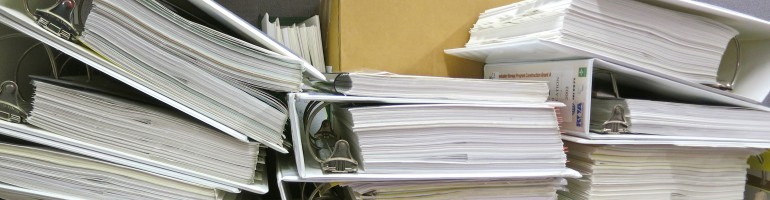
Abundance (partly because the world was so rich back when we had all that timber and oil and big fish and groundwater and partly because there were so few people) used to be the rule, but I think we moved out of the Age of Abundance into the Age of Information back in the mid-seventies.  That’s when we started writing plans. All those plans, those three-inch thick documents.  Timber Harvest Plans.  Habitat Conservation Plans.  EIRs and EISs.  Water Management Plans.  Grazing Plans.  Biological Opinions.  People thought they were writing those plans for one project or another, but taken together, I think they were the entry fee into the Age of Information.  They were the first pieces of infrastructure in this new era, just like rail lines and assembly lines were for the manufacturing age1.

We only lived in the Information Era for about thirty years, and we didn’t even get good at it.  We’re still figuring out things like how to use GIS all the time, and collect enough LIDAR data and give citizens easy access to rich information.  We’re only barely starting to understand how to present it.  On the whole, we’re could have used another fifty years to collect information and do things with it2. But climate change is now, and climate change forces us into the Age of Management.  From here on out, the unmanaged default is going to suck.

From now on, we have to manage things.  A lot.   Up and down the scale, we’re going to have to finesse the details.  Individual people have to plan trips, find the shortest route and combine errands.  Cities will have to count the greenhouse gas emissions of new development.  Reservoir operators are going to have to plan water releases to the daily weather.  We aren’t rich any more and we will have to pay fine-grained attention.

Once most are fed and sheltered, the true privilege of being rich is mindlessness, Tom and Daisy’s famous carelessness.  That was how America lived from the fifties to the nineties, but that’s over now.  In the Age of Management, we move into constant planning, deliberating, choosing and implementing.  All the time.  It is better than not doing that (because the alternative is Katrina-like collapses), but it is a burden.  It also makes me wonder if over the next few decades, our limiting ingredient is going to be thought.  Each of us will be paying this thought-debt in our personal lives, as we adjust and scrounge and figure out how to live like this.  But the big problems will take just as much care.  We can solve any of them, when we must, with lots and lots of thought and implementation.  But there are so many coming, at once, and we will have to think very hard about all of them.  Maybe I’m completely off-base and labor will be the problem.  Or physical capital.  But I’m not sure of that.  Sometimes when I go to a lot of meetings and read lots of newspapers and blogs and comments, I get worried.  When I see how little dense thought is out there, how much is cribbed or facile or rationalizing, I wonder if we have enough sheer thought to find the least-painful way into our new world3.

UPDATE:  Reader Todd sent me a copy of Jeremy Grantham’s GMO Quarterly letter, which hits on some of the same themes.  I liked the essay about the Age of Limitation, starting on page 8.  Thanks!

1 And some computers came along, too, to help us.

2 No electronic medical records yet? Although I have seen some useful and interesting stuff recently.  I particularly like having public meetings archived online, with agenda items linked and all of it categorized, so you can search by speaker (even the public comment!).  That is actually handy and user-friendly.  Facebook seems to be particularly relentless about tracking me down.  (No!  Do not send me an invitation!  They’re, like, the CIA.  If the spooks want to know who my friends are, they should have to tap my phone without a warrant, the American way.)

3 Tyler thinks this is reason enough to support population growth, because increased people will bring with them increased thought that we can apply to problems4.  I think that having far too many people on the planet create problems that overwhelms the advantages of added thought, especially since most of
them are living in conditions that make abstract concerns low priority.  Better, I say, to get the number of people down and make sure all of them are thinking at top capacity.

4 If I have correctly understood him.

Comments Off on An old post on adjusting to scarcity

Filed under Uncategorized

An old post on new dams

So, like, there’s a drought in California.  And, like, there are big bathtub rings around our northern reservoirs.  So, do we need more dams?  There are a couple being studied now.  What are these two new dams1?  Will they get built?  Do we hate them?  Who supports them and why?  Is more surface storage a necessary investment to support the next thirty million people here?

Everyone on the agriculture side of water use is crying out for more surface storage.  The standard line is that the State Water Project was designed to be much larger, but never got finished, what with that terrible Wild and Scenic Rivers Act and the popular vote against the Peripheral Canal.  Then (usually) Republicans and agricultural water users say that we haven’t built any major water infrastructure for decades while the population of California has shot up and isn’t it self-evident that we need new reservoirs?  Besides, climate change!  Ten years ago, even five years ago, that kind of talk would have been dismissed immediately by everyone in the water field.  It was taken as an absolute that “the era of dam-building is over” and that there was no public support for new dams, largely because of Cadillac Desert.  The prospect of new dams is coming back, though, with some interesting twists2.

I see the vehement editorials calling for new dams and I grin.  Every single time, I wonder.  Suppose your new dams are built, buddy.  What will you put behind them?  Root beer?  The waters of the state are spoken for.  Ag and cities have claimed what is there, and they aren’t getting all they hope for.  In-stream water uses are both increasing and being hardened by the Endangered Species Act.  Most climate projections for California estimate it will be about 10% drier within decades.   The State Board has applications for the next 4.8 million acre-feet of water that miraculously appears.  The act of pouring concrete for a dam doesn’t call water into being.  What are these dams supposed to impound?

Strangely enough, because of climate change, there may be one chunk of water that those dams could usefully capture.  The climate change models predict that we will get less water overall, and they predict that more of the water we do get will fall as rain instead of snow.  This turns out to be really important.  In the era that is ending, the snowpack held water from winter until June and July, releasing it slowly as snowmelt.  Once you knew how big and wet the snowpack was, you knew how much water you had to make last until November and roughly when it would show up at your reservoir.   Rainstorms are going to be a different story.  Rain falls and runs off in the space of days, a big slug of water arriving at the reservoir at once.  Our reservoirs aren’t big enough to catch that water all at once.  Right now they empty all spring while new snowmelt arrives to top them off; that flow-through creates a lot of capacity.  The other problem is that when you get snowstorms, you can add up the snow and know how much water you’ll have to handle later.  When you get a rainstorm in March, you don’t know whether you’ll get another one in April.  You must empty your dam, so it can catch the next storm before it turns into a flood.  That water, the water that you have to empty out so your dam can hold and control later spring rains, is the water that new surface storage could catch.  Without the snowpack to hold it for us for months, we don’t have space to capture that.  It would run out to sea, and if we’re lucky it won’t take out a city on the way.

The alert reader already noticed that this is not new water.  This is the same water that used to be slow snowmelt, moving through the tops of our reservoirs each spring.  California is looking at building two new dams ($3-$4B each) to try to keep some of what we have now.  Makes one’s eyebrows raise, doesn’t it?  Climate change is expensive.  It also makes one wonder who is going to pay for that?  Agriculture tops the voices calling for new dams, but I don’t know if they realize that it won’t get them anything more than they have, if that.  On the other hand, if I were in a sector that everyone agreed would be the first to give up water, I’d probably call for new storage too.  They aren’t offering up money, in any case.

Well, say the dam-haters.  Maybe we still don’t want two new dams anyway.  Maybe we’ll conserve lots and stop growing rice and alfalfa in the desert!!! agriculture will contract considerably and we’ll just make do on two-thirds of the water we have now, even as the population grows to sixty million people in 2050.  Water markets will solve all this!

Maybe.  Considering the reflexive antipathy to dams sowed by Cadillac Desert, that may be how this works out.  But the other interesting perspective is that both of those dams will almost certainly be operated primarily to fulfill environmental demands.  Because salmon runs and the delta smelt are so precarious, the Endangered Species Act is driving water priorities.  Until salmon or smelt go extinct or recover, they dominate where water goes and when.  When water managers talk about Sites Reservoir (the one proposed for the Sacramento Valley), they don’t talk about new water for cities.  They talk about the location.  They get all dreamy-eyed about the flexibility it could provide to manage fish requirements in the Delta.  It takes three days from water to get from Shasta to the Delta, but it would only take one day from Sites.  Doesn’t sound like much, but it can mean cold water and better tuned salinity control in the Delta.  Anything that helps fish means that you can keep the big pumps to L.A. running, and water managers really want that.  No one says this explicitly, because it sounds too much like extortion, but most water behind Temperance Flats will likely go to the San Joaquin River restoration project.  Having that dam would give water managers another dial to turn as they try to keep cold water in that poor river until October.  Maybe those dams don’t happen and that water comes straight out of ag.  But maybe those dams don’t happen and environmental laws yield instead.

So, do we hate these dams?  Should enviros fight them forever?  Well, we don’t love them for the old-school reason.  They won’t produce new water.  The big cities in the south have realized this; they aren’t offering to pay or even lobbying for new dams.  Both dams would destroy a beautiful valley.  They’ll be expensive.  On the other hand, they’ll have downstream environmental benefits in ways that old dams never provided.  We have more of a need to catch floods, because that’s what we’re going to get in the new hydrology.  They may give us a way to keep more of the ag we have now, if that is the goal.

Honestly, I can’t decide whether I’m personally opposed to these new dams.  I know for sure that the arguments don’t line up in the old ways, cities and ag clamoring for more against the enviros.  With climate change unsettling everything we’ve optimized, we’re likely to be grateful for anything that increases operational flexibility.  I’m more intrigued by the idea that there are actually way more valuable water infrastructure projects that you would never predict!!! Since you were sweet enough to read all the way to the end, I promise I’ll tell you what they are someday.

1The new dams being proposed are named Sites Reservoir and Temperance Flats.  Both are off-stream, which means that instead of dams placed across a river and turning the river into a lake, they put a dam in the neck of a valley near a river and sometimes divert water to turn it into a lake.  Sites Reservoir is on the west side of the Sacramento Valley a couple hours north of Sacramento; it would be connected to the Sacramento River .  Temperance Flats is in the Sierras, a little bit south of Yosemite; the waters that would fill it would otherwise drain to the San Joaquin River.

2 It cracked me up that the money for funding the dam studies was listed under the “Conjunctive Use” portion of the water bond.  This, my friends, is not Straight Talk we can believe in.  The term conjunctive use usually means planned switching between your surface water and your groundwater.  So if you have a big water year, you would try to fill your groundwater aquifers, in anticipation of pulling gw out in a dry year.  That’s all conjunctive use means, and everyone approves of conjunctive use, because who doesn’t want to bank supplies and use the best supply for the occasion.  So stashing the prospect of new dams under Conjunctive Use, while not a lie, because conjunctive use does involve switching between stored water sources, is definitely a stretching a innocuous term past all previous uses.

Comments Off on An old post on new dams

Filed under Uncategorized

Happy New Years!

The next few posts were written to be read from the top down.  Hope you like them.

Comments Off on Happy New Years!

Filed under Uncategorized

Field and basin efficiency in general.

The junkies among you can read a more technical description of field and basin efficiency here, or see a sketch of a description in this slide show (which only makes sense if you already know the topic).

The reason I don’t like to talk about field and basin efficiency is that ag advocates are known to do a sorta bullshit sleight of hand, saying that their “efficiency” is some amazingly high number (anything higher than 90%) and so they don’t need to listen to any more of this talk about new irrigation practices. If they are talking basin efficiencies, that means that for some large boundary, perhaps their water district or a watershed, the amount of water they collectively apply is only barely more than collective crop demand, and presto! Everyone in that area is a very good irrigator. Except they don’t really say “basin efficiency”. They say “efficiency” or “district-wide efficiency”, and hope that you will be suckered into thinking that they mean the average of every single grower’s field efficiency.

Field efficiency comes from matching irrigation water to crop demand on a single field or small farm. This is the realm that individual farmers can influence, with the type of techniques that the Pacific Institute talks about (irrigation scheduling, crop shifting). If every single grower had an field efficiency in the 90s and you averaged them to get some average field efficiency in the 90s, that would indeed mean that you are talking to very skilled irrigators who don’t need any advice from you. But having a basin efficiency in the 90s doesn’t mean everyone is doing a good job applying a precise amount of water. It just means that water gets used again and again within the big boundary area.

I kinda resent giving the idea of basin efficiency much credence, because some advocates use it in a sneaky way to imply that all their irrigators are doing a good job. I also don’t like that some advocates use the idea of basin efficiency to say that there is no good reason to improve their practices on the smaller field scale. This isn’t true, as both the irrigation professors and the Pacific Institute report point out. What high basin efficiency can look like in practice is that growers overapply water at the top of the basin and other growers use it again, as tailwater with pesticides or fertilizers or salts in it. Or it sinks into the ground and other growers pump it out. Or it returns to the river, salty and warm, and gets diverted again. You could still have high basinwide efficiencies, but you pay costs in water quality or pump energy or crop yield. Taking more water than you need (because it will return soon enough or so that it can percolate into groundwater) hurts the rivers it was diverted from; fish would like to live in that clean cold water until the very last second before it gets used. So yeah. There are real problems with using high basin efficiencies to give yourself a free pass.

On the other hand, there is no denying that it exists. A lot of diverted water gets used several times. It is a cheap way to move water, or at least a way to move water that externalizes some of the costs. Further, people have been living in this connected system for two generations now. I have to think they have roughly optimized their positions and come to rely upon them. Getting someone else’s water after it ran off the field may not be a good way for the system to work, but at this point, I’m inclined to think it is the best bet for that second grower. They’ve had forty years to debate sinking a well or digging a pipe directly to the river. If they thought those were better for them than taking tailwater, I think they’d have done it. Disrupting that system (like, if you had the grower at the top really cinch down on irrigation efficiency) will probably put downstream growers in a worse position. To the extent that it means that they’re internalizing their environmental costs, I’m fine with it. But as much as they perceive it to damage their interests, they’ll fight that.

Comments Off on Field and basin efficiency in general.

Filed under Uncategorized

Field and basin efficiency in the Pacific Institute report.

Yeah. They missed the ball on this one. I mean, they talk about field and basin efficiency on pages 14-16, but didn’t follow through. If water is used several times in a basin, then the amounts you could save by practices that make each field more efficient aren’t additive. If you improve the top field from 70% efficient to 85% efficient, all the downstream users have also had a chunk taken out of their supply. If they applied management and money to adjust for that missing chunk, their efficiencies would all move upward some small percent. If they don’t adjust their field efficiencies up, they’ll go get more real water from somewhere. Either way, you can’t add up all the yields from improving field efficiencies as if they were separate. Shit. This is hard to explain. Ummm…

The potential for wringing water out of California agriculture is NOT:

(new improved field efficiency – old sloppy field efficiency)(annual applied water) = bonus water for fish AND cities AND still plenty for ag!

It would be like that if all of the farmwater were completely independent. Then you could add each efficiency improvement up separately the way the Pacific Institute report does.

The potential for wringing water out of California agriculture IS:

(new improved basin efficiency – old sloppy basin efficiency)(annual applied water) = not a whole hell of a lot.

Keeping in mind that I don’t like the concept of basin efficiency any more than you do (because people with an agenda use it for evil), when I hear estimates for basin efficiencies in CA, they’re on the order of 95%. Considering that groundwater levels are dropping drastically, I do not believe that there is a free 10% of inefficient water use sloshing around aggregate Great Valley agriculture. It is also worth remembering that is gets pretty expensive to go after the last few percents of efficiency. Your early gains are all big and cheap, but your last gains start to cost real money.

Comments Off on Field and basin efficiency in the Pacific Institute report.

Filed under Uncategorized

Missed it by a lot.

Perhaps the most persuasive piece of the irrigation professors’ critique was this text box:

If so much water is being wasted as implied by the estimates of potential savings in the PacInst Paper, it would have to be going somewhere. That somewhere could only be into the ground or out through rivers. But we know that there is a huge groundwater overdraft (perhaps 2 million acrefeet/year) in the San Joaquin Valley and the San Joaquin River runs dry near Dos Palos in the summer.   (emphasis in the original)

It sounds facile, but it is true.  The Pacific Institute efficiency argument says, in effect, that 3.5 million acrefeet of water is sloshing around California agriculture, not being taken up by plants*.  If so, where is it? 


There aren’t many choices.  The Tule Lakebed doesn’t hold a three foot deep lake in August.  Excess irrigation water sure isn’t draining to the San Joaquin River. In fact, look. The western part of the San Joaquin Valley sends about 50,000 acrefeet/year of really gross water to the Grasslands Bypass Project (16,000 af this dry year). Fifty thousand acrefeet a year? Draining the better part of the west side of the San Joaquin Valley? You’ve got to show me a whole bunch more bypass projects to come up with the other 3.45* 1.65 million acrefeet the Pacific Institute says is loose water. Or you could show me rising groundwater levels, as the ground soaks up excess irrigation water. Except you can’t, cause they aren’t there.


The only explanation I can come up with for such a huge gap between building upward from models of field irrigation efficiency and working downward from a valley-wide water budget is double counting. I think the Pacific Institute method of adding up efficiency improvements from all those farms double (and multiple) counts the same chunk of water each time it gets re-used as if it were separate chunks of water from which you can extract 10% every time. That’s why I don’t think there is potential to get 3.5 maf of water from Great Valley agriculture and have ag stay at current levels.


Continue reading

Comments Off on Missed it by a lot.

Filed under Uncategorized

Which is why…

I think that a report that describes efficiency improvements that let ag farm happily while 10% of the water they use goes elsewhere is a false promise. It is balm for urban users and enviros, who would like to trade money for efficiency improvements for real wet water and still leave ag whole and happy. But that isn’t realistic.  I think ag would contract sharply if big pieces of water weren’t available to them*. If we’re honest, that is the discussion we should be having. Of course water for the uses Californians value will come out of ag water use. It is that, new dams**, or tapping Wild and Scenic Rivers, and all the hippie urban votes will come down against ag. I think we should be planning a managed retreat for agriculture. I don’t think ag should be fighting to protect the acreage they’re farming now. They should be fighting to protect whatever core they value and to extort as much exit money out of the Californian collective as they can.

The rough estimates I talked about a couple days ago can give us an idea of scale. Six million acrefeet of lost snowpack storage? Cities and rivers jonesing for another 3.5 million acrefeet? That’s three million acres of farmland, out of about nine million acres***. Some of that farmland will retire itself. About half a million acres on the west side of the San Joaquin Valley are saltifying (a process that will speed up as climate change makes the weather hotter, which means applying and evaporating even more slightly salty water). We’re gonna lose about 100,000 acres in the Delta as islands collapse. (Sweet graphic here. ) Urban encroachment will take out a bunch more acreage (although perhaps less, now that we have new urban planning legislation to discourage sprawl.). So, you know. Maybe 800,000 acres out of 3,000,000 acres will retire themselves.

The rest will involve choices. We could let it happen without planning, in which case ag will be eaten from the bottom up and by chance, with financially vulnerable farmers collapsing in a hodge-podge. We could institute a water market, which will arrive at an economically efficient outcome, regardless of whether we like an economically efficient outcome. A really fucking stupid way to do it would be based on order of seniority, with more recent farmers having to take the hit first and farmers that have been there a long time being protected until the end, no matter what they grow or how. That’d be unbelievably stupid.

Or, we could choose something. We could decide that we like certain farming practices and preserve the farm acreage that uses them. We could decide what we want six million acres of farmland to look like, on what soils and where and how big the farms should be, and design a system that supports those. We could choose to save the acreage on the best soils. We could choose to maintain the agriculture that supports rural communities. We could choose to retire the acreage that would make the best wildlife habitat when retired. We could decide it isn’t our responsibility to feed the whole country (which has perfectly good farmlands of its own if they weren’t growing corn and soybeans) at the expense of our own rivers. I don’t want to shock you or anything, but what I’m saying is that we could apply priorities to get the best possible outcome from a large, wrenching re-alignment.

But we will not face choices like that, or even admit that we have to make them, if we cling to the hope of efficiency gains that will let us carry on as usual. That’s my real gripe with the Pacific Institute report.


Continue reading

Comments Off on Which is why…

Filed under Uncategorized

Aaaand…

That’s why I’m so disappointed with the outcome of the Ag Vision process. So much time and comment and thought went into crafting a vision for California agriculture in 2030. Truly, the transcripts of their public meetings are amazing and you should read them for firsthand accounts of what it is like to farm in California*. All that knowledge and expertise, and they came out with a bunch of platitudes? I mean, really? The framework reads like “we want a bunch of obvious good things”.  Well yeah.  I do too.  This is still bigger-pie territory, not facing-hard-trade-offs territory. Bummer.


*Hee. I am not just telling you that you should read government reports for fun. I’m directing you to read transcripts of public meetings for fun. Rock on.

Comments Off on Aaaand…

Filed under Uncategorized