I knew that almond acreage had expanded since the 2006-2009 drought. I knew that almond acreage went from 825,000 acres of almonds in 2010 to 940,000 acres in 2014. But it was still striking to see all those new trees. I thought some things.
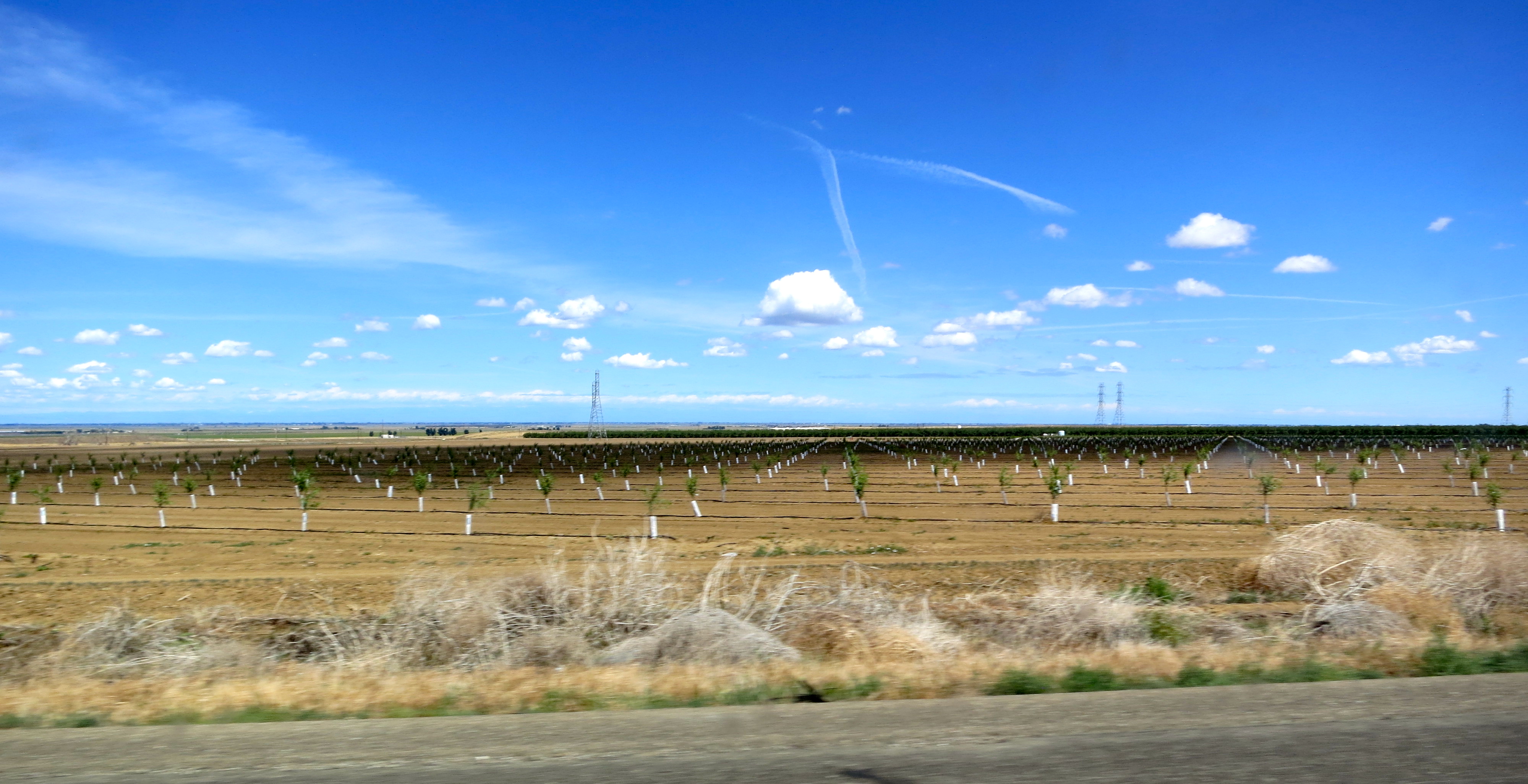
a. I heard a completely unsubstantiated rumor that during the 2006-2009 drought, growers in Westlands deliberately didn’t plant acreage close to the 5 and even harrowed that soil so that it created more of a dust storm. I couldn’t support that rumor one bit, but I did muse that planting almonds all the way up to the freeway would make similar image management more difficult in this drought.

II. Westlands made a big fuss about all the acreage it fallowed in the 2006-2009 drought. This comparison of irrigated acreage was a big deal at the time.
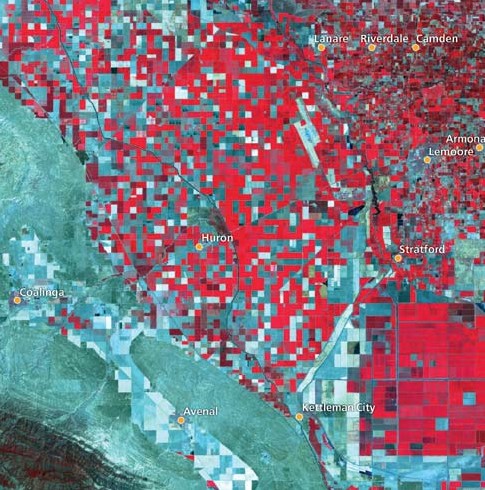
Red is irrigated, 2006.
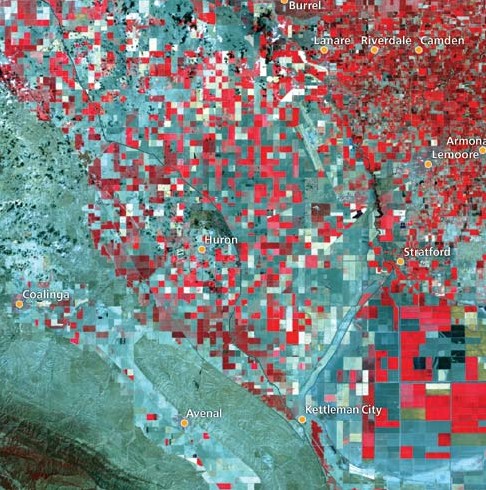
Blue is fallowed, 2009.
These new planting of almonds mean that some time in between 2010, the first wet year after the drought and 2012, our last wet year before this drought, the farmers in Westlands thought to themselves: Boy howdy, people sure are getting some nice prices on almonds. I want some of that so bad that I will invest nearly $1M/acre in capital in almonds, backed by my surety of getting water every single year for the next twenty to thirty years. Surely drought like the one that happened two years ago could never happen again, despite widespread predictions that climate change will bring about a more variable climate. Why, what could predictions mean to me, here in our second wet year in a row since a three year drought that caused substantial fallowing in this exact location?
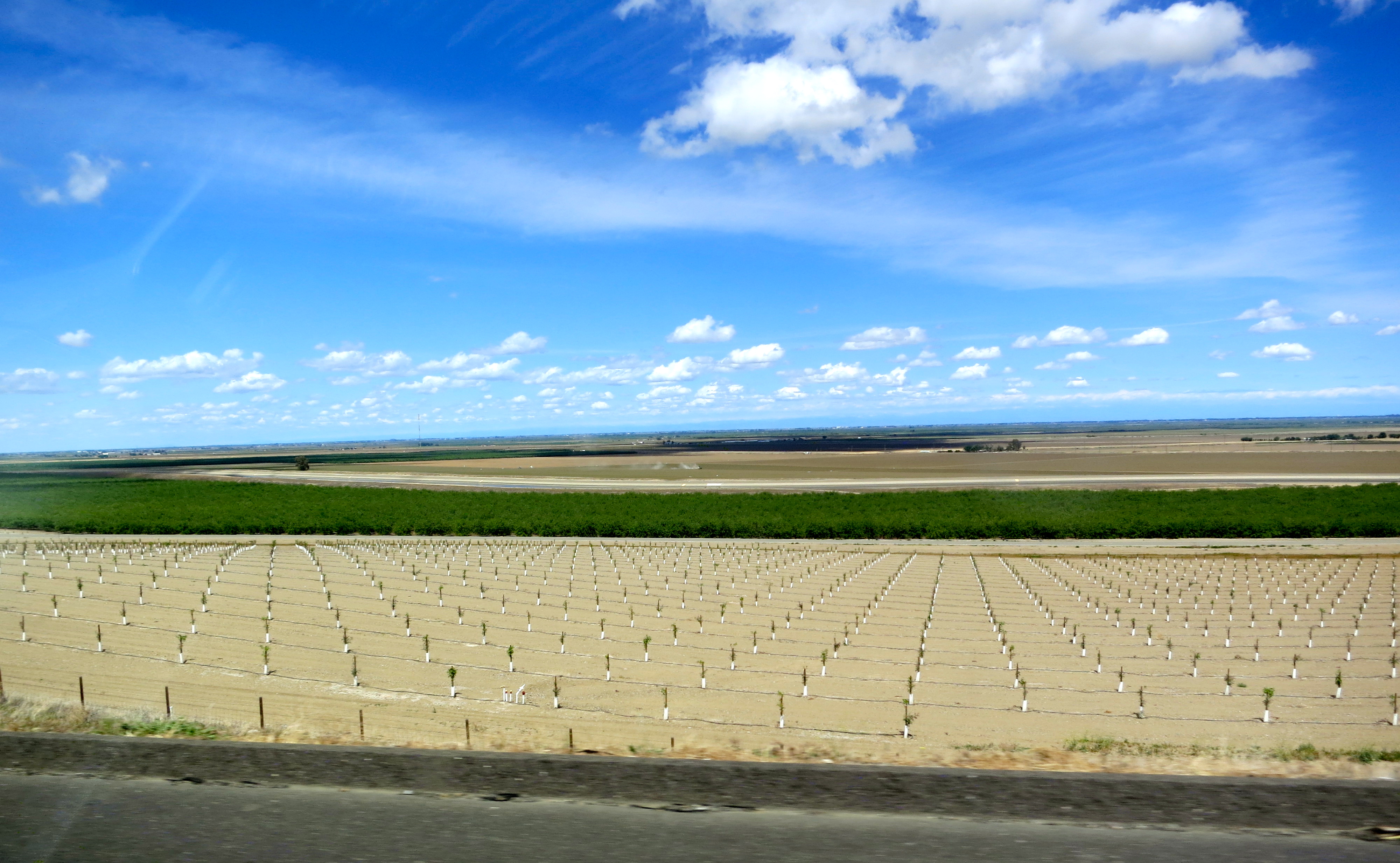 (I had to squint, but I think those might have been pistachios. Almonds in the background, of course.)
3. Here is an article about rising food prices due to drought.
American consumers are already feeling the pinch of rising food prices, and they will likely experience more—courtesy of California’s devastating drought.
“I would expect a 28 percent increase for avocados and 34 percent for lettuce,” said Timothy Richards, a professor of agribusiness at Arizona State University who conducted research released this week on probable crop price increases stemming from the ongoing drought.
In a phone call with CNBC.com, Richards added that the price increases would also include foods including berries, broccoli, grapes, melons, tomatoes, peppers and packaged salads. The higher rises should be felt in the next two to three months, he said.
Those prices are rising because growers are fallowing their row crops to protect their trees. I understand that in any single year of drought, given that they have invested so much in their orchards, they must do that. But, since growing row crops for American consumption only happens on perhaps a third to forty percent of Californian irrigated acreage, there is no need for this. If it were the first priority of Californian growers to hold American vegetable prices steady, they could grow all the produce they ever do, even in this drought. These increased food prices are a result of Californian growers choosing to gamble for high nut profits from China.
People who believe in markets believe this is fine. Allowing Californian farmers to trade Californian rivers, fish and aquifers and American produce prices for higher monetary profits is generally thought of as underpinning a strong agricultural economy, which is thought of as inherently good. Fine. If that is the thinking, then farmers and growers are behaving like reasonable market actors. But they cannot have it both ways. They cannot be hardheaded market actors and also our noble sources of food that should be supported by drought emergency measures. They cannot be our food producing buddies that we take care of during droughts AND people who are intentionally shafting us by fallowing produce acres so they can maximize almond profits in a couple more years (which must always be wet years). If they are hardheaded market maximizers, let them fall from their gambling on climate reliability and their political strength.

• Since when are we a colony of China? We wreck our natural resources and increase food prices to our own people to keep China stocked in tree nuts? Really? I get that lots of Africa is being bought by China and now some of the Arctic. But I have a real hard time accepting that Chinese tree nut demand and grower greed is reason enough to harden water demand such that we must sacrifice our own environment in dry times. (I especially resent grower greed for tree nut profits because everything in ag is fetching great prices as climate change knocks other growing regions down as well. That’s why ag land prices are soaring.)(I don’t mean to be jingoistic about China. I am indifferent about to whom we ship nuts. But there is a meme that the growing Chinese middle class will create a practically infinite demand for tree nuts, such that oversaturation and price collapse won’t happen. This justifies ever more trees.)
{I will likely come back to this for more editing and formatting. Just so you know.]
 On the public record